By Aisha Diallo · Published August 2025 · 10 min read
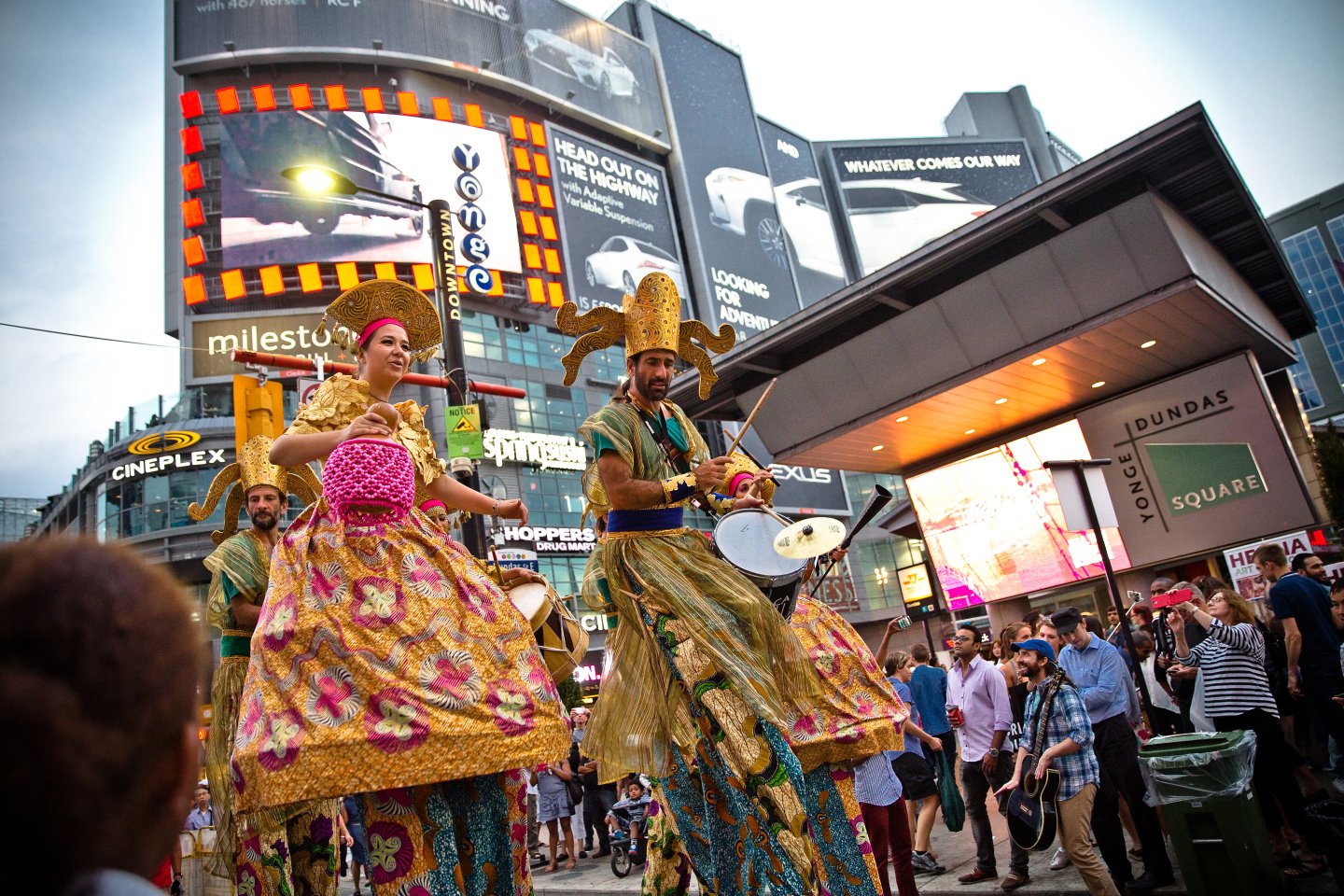
Culture in Ontario is not a single, unified thing. It is a collection of layered histories, overlapping communities, and evolving social norms that coexist — sometimes harmoniously, sometimes with friction — across a province of fourteen million people. To understand daily life in Ontario is to understand something genuinely complex: a place where the oldest human histories on the continent sit alongside one of the world's most rapidly evolving immigration landscapes.
This article explores Ontario's cultural character — from its Indigenous roots to its contemporary diversity, from its provincial symbols to the social rhythms of everyday life. The aim is not to flatten Ontario into a simplified story, but to offer a starting point for the kind of awareness that makes community participation more meaningful.
Indigenous Peoples and Ontario's Deep History
Before Ontario was a province — before European settlement, before the fur trade, before the colonial period — these lands were home to Indigenous peoples whose histories here extend back thousands of years. The Haudenosaunee, the Anishinaabe (including the Ojibwe, Odawa, and Potawatomi), the Huron-Wendat, the Mississaugas of the Credit, and many other peoples lived across what is now Ontario, with sophisticated systems of governance, trade, language, and culture.
This history is not simply a backdrop to contemporary Ontario — it is an active and present part of it. First Nations communities continue to exist across the province, maintaining languages, governance structures, and cultural practices. Indigenous-owned businesses, cultural organizations, and advocacy bodies play significant roles in Ontario's civic life. Land acknowledgements — statements recognizing that we are on the traditional territories of specific peoples — have become a common feature of public events, government proceedings, and institutional settings.
Understanding Ontario's Indigenous history is not a matter of looking backward — it is an essential part of understanding the province as it is today.
The Truth and Reconciliation Commission of Canada, which completed its work in 2015, issued 94 Calls to Action addressing the legacy of the residential school system — a system in which Indigenous children were removed from their families and communities and placed in institutions where their languages and cultures were suppressed. The intergenerational impact of that system is still felt today, and awareness of it is important for anyone who wants to understand contemporary Ontario.
A Province Shaped by Immigration
Ontario has been a destination for immigrants since the eighteenth century, when United Empire Loyalists arrived from the American colonies after the Revolutionary War. Waves of Irish immigrants followed in the mid-nineteenth century, then immigrants from southern and eastern Europe in the early twentieth century, and then, from the mid-twentieth century onward, growing numbers from South Asia, East Asia, the Caribbean, Africa, and the Middle East.
Today, Toronto is consistently ranked among the most diverse cities in the world by the proportion of foreign-born residents. In the Greater Toronto Area, it is common to hear dozens of languages in the course of a single day. Neighbourhoods in Toronto — Chinatown, Little Italy, Greektown, Little Portugal, Scarborough's Tamil neighbourhoods, Brampton's South Asian communities — carry the cultural character of the communities that built them over generations.
This diversity is reflected in Ontario's food culture, its festivals, its arts scene, and its public life. It also means that Ontario has developed norms around multiculturalism and inclusion that new residents will notice: the expectation that cultural difference is a normal and valued part of community life, not something to be managed or minimized.
Provincial Symbols and Identity
Ontario has a set of official symbols that reflect the province's character and history. The white trillium, Ontario's provincial flower, blooms in spring across the province's forested regions and has appeared on the provincial coat of arms since 1868. The Common Loon is the provincial bird — a species closely associated with Ontario's many lakes and an iconic part of the province's natural identity. The Eastern White Pine is the provincial tree, a species historically important to both Indigenous peoples and the province's early settler economy.
Ontario's motto, "Ut Incepit Fidelis Sic Permanet" (Loyal she began, loyal she remains), reflects the province's historical ties to the British Crown. Ontario Day, celebrated on the first Monday of August, is a statutory holiday that gives the province's name to what is otherwise widely called the "August long weekend."
Everyday Social Norms
Daily life in Ontario follows patterns shaped by the province's geography, climate, and cultural mix. A few social norms are broadly observed. Politeness and deference in public interactions are common — holding doors for strangers, thanking service workers, and avoiding confrontational interactions in public are all widely practiced. Punctuality is generally valued in professional and formal settings, though social events are often somewhat flexible.
Personal space in public — on transit, in queues, in shared spaces — is generally respected. Eye contact in casual interactions is common and not considered intrusive. Tipping in restaurants, taxis, and personal service industries is the norm; 15–20 percent of the pre-tax bill is a common range in restaurants.
Ontario has strong human rights legislation, and discrimination based on race, religion, gender, sexual orientation, disability, and numerous other grounds is prohibited by both provincial and federal law. These protections are taken seriously in workplaces and public accommodations, and awareness of them is important for newcomers.
Festivals and Cultural Life
Ontario's cultural calendar is rich, particularly in its urban centres. In Toronto, the Toronto International Film Festival (TIFF) each September draws global attention and is considered one of the world's most important film festivals. Caribana — officially the Caribbean Carnival — held each summer, is one of the largest street festivals in North America, celebrating Caribbean culture and heritage. Nuit Blanche, an all-night contemporary arts festival held in early October, transforms Toronto's streets into an open gallery.
The Royal Agricultural Winter Fair, held each November in Toronto, has been celebrating Ontario's farming heritage since 1922. The Ottawa Tulip Festival, held each May in the national capital, draws hundreds of thousands of visitors and commemorates a gift of tulip bulbs from the Netherlands following the Second World War. Pride Toronto is one of the largest Pride festivals in the world, reflecting the city's strong LGBTQ+ communities.
Smaller cities and towns across Ontario maintain their own community festivals, fairs, and cultural events throughout the year. These gatherings — from agricultural exhibitions to music festivals to cultural heritage celebrations — are a significant part of community life outside major urban centres.
Language and Communication
English is the primary language of public life in Ontario, but French has constitutionally protected status. French-language services are required in many public contexts, and French-language school boards operate alongside English ones. In communities near the Quebec border — particularly in eastern Ontario — French is widely spoken in everyday life.
Ontario is also home to speakers of many Indigenous languages, including Ojibwe, Cree, and Mohawk, among others. Efforts to preserve and revitalize these languages are ongoing, supported by community organizations and some government programs.
Climate and Seasonal Life
Ontario's seasons shape its cultural rhythm in significant ways. Summer — particularly the warmer months from June through August — brings outdoor life into full swing: patios, parks, festivals, cottage country, and hiking. Autumn is celebrated for its dramatic foliage, particularly in the Shield region and cottage areas, drawing visitors from across the province and beyond.
Winter is a defining experience for Ontario residents. Cold temperatures, snowfall, and shorter days require adaptation — both practical (winter clothing, winter tires, understanding how to drive on snow) and social (an appreciation for indoor warmth, community gatherings, and the particular quality of a winter landscape). The February-March period, sometimes called "cabin fever" season, is when the length of winter starts to weigh on people — a shared cultural experience that unites residents in commiseration.
Spring — often arriving slowly, with false starts — is greeted with genuine relief. The return of warmth, the opening of patios, and the bloom of the trillium each April and May are collectively meaningful moments in Ontario's seasonal cycle.
Participating in Community Life
One of the most direct ways to develop cultural awareness in Ontario is simply to participate in community life — attending local events, shopping at farmers' markets, visiting libraries (which remain remarkable public institutions in Ontario), and getting involved in local civic processes. Ontario's public libraries, in particular, are community anchors: they offer not just books but community programs, free internet access, ESL classes, and a quiet, open space for people of all backgrounds.
Understanding Ontario's culture is an ongoing process — one that no article can fully capture. It is built through daily interactions, through listening, through curiosity, and through a willingness to engage with the full range of what the province offers.
Disclaimer: This article is for general educational and informational purposes only. Cultural norms and public policies may change over time. For authoritative information on Ontario's human rights protections and public services, please consult official government sources. QuizOntario is an independent educational platform with no affiliation to government bodies.